
What Annie Hughes Ate to Win the Tahoe 200
Key Takeaways
Annie Hughes, the top female finisher at the 2025 Tahoe 200, relies on over 50% real food during 200-mile races, significantly reducing her gel intake after experiencing GI distress.
Her staple race foods include ramen mixed with mashed potatoes, chews, potato chips, quesadillas, and diluted hydration mix to avoid overwhelming her digestive system.
She starts caffeine around the 24-hour mark, preferring Dunkin' Donuts iced mochas over caffeine pills for their combination of sugar, caffeine, and easier digestion.
Annie swears by the same pre-race meal and keeps snacking throughout the race to avoid gut issues.
Practice is essential: Annie tests aid station foods during long training runs, prepares nutrition baggies for each race section, and keeps backup options like ginger chews and Tums on hand.
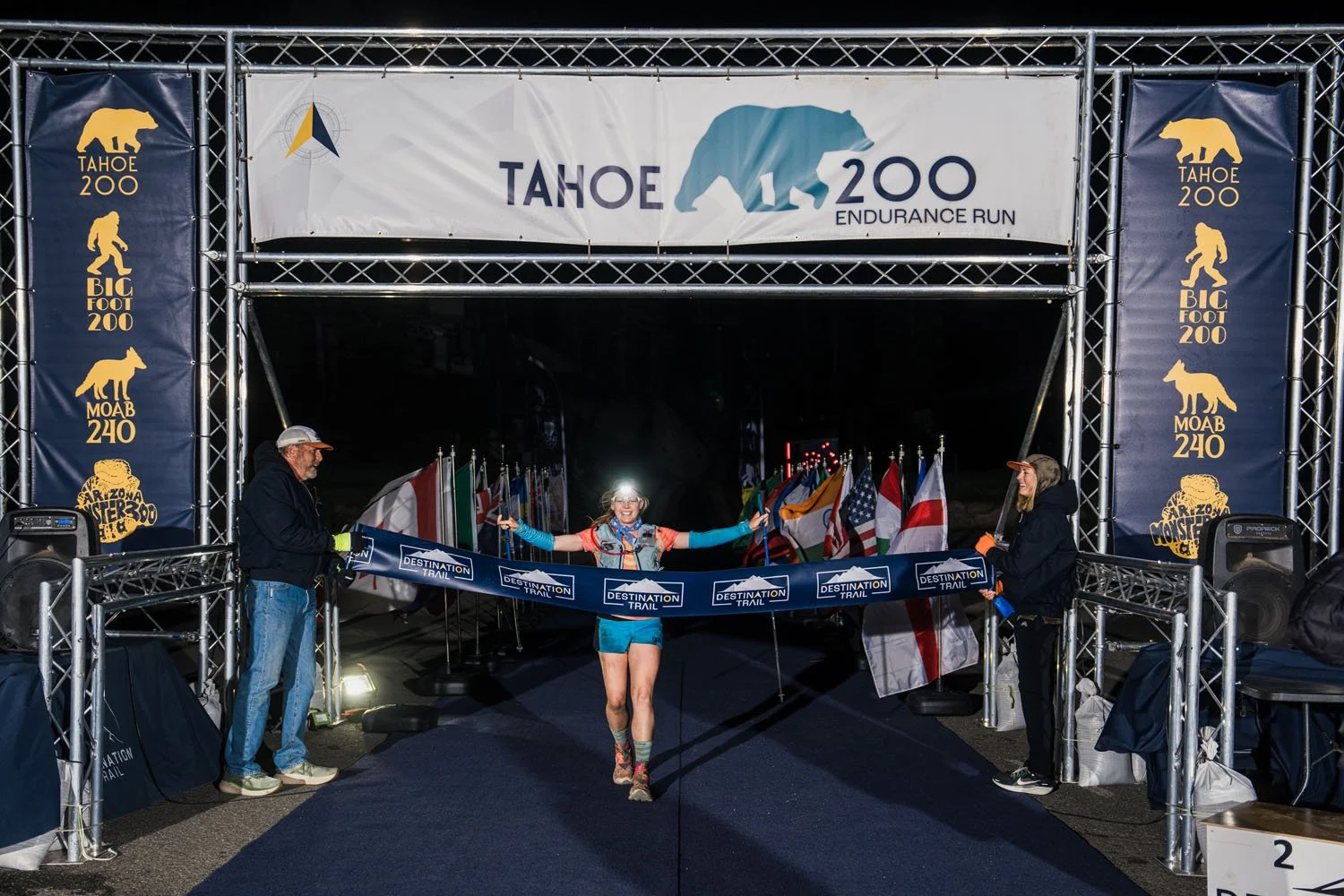
When Annie Hughes crossed the finish line as the top female finisher at the 2025 Tahoe 200, she'd consumed more than her fair share of unconventional fuel. Ramen mixed with mashed potatoes. Homemade muffins. Potato chips. And very few gels, despite what conventional wisdom might suggest.
If you're training for a Destination Trail race like the Tahoe 200, Bigfoot 200, or Moab 240, Hughes's approach to fueling might surprise you. For her, real food is a significant part of her multi-day race strategy.
The Longer the Race, the More Real the Food
Hughes has a simple philosophy: "The longer the race, the more real the food becomes."
While shorter ultramarathons might allow you to survive on gels and drink mixes, she says 200-milers demand a different strategy entirely.
"For shorter distances it's really hard to get away with chewing food, especially if it's hot," Hughes explains. "But at longer distances, we're going at a much lower effort where our bodies can actually process real food."
What's Actually in Her Pack
Hughes estimates that over 50% of her race nutrition comes from real food, with only 20-30% from sports nutrition products.
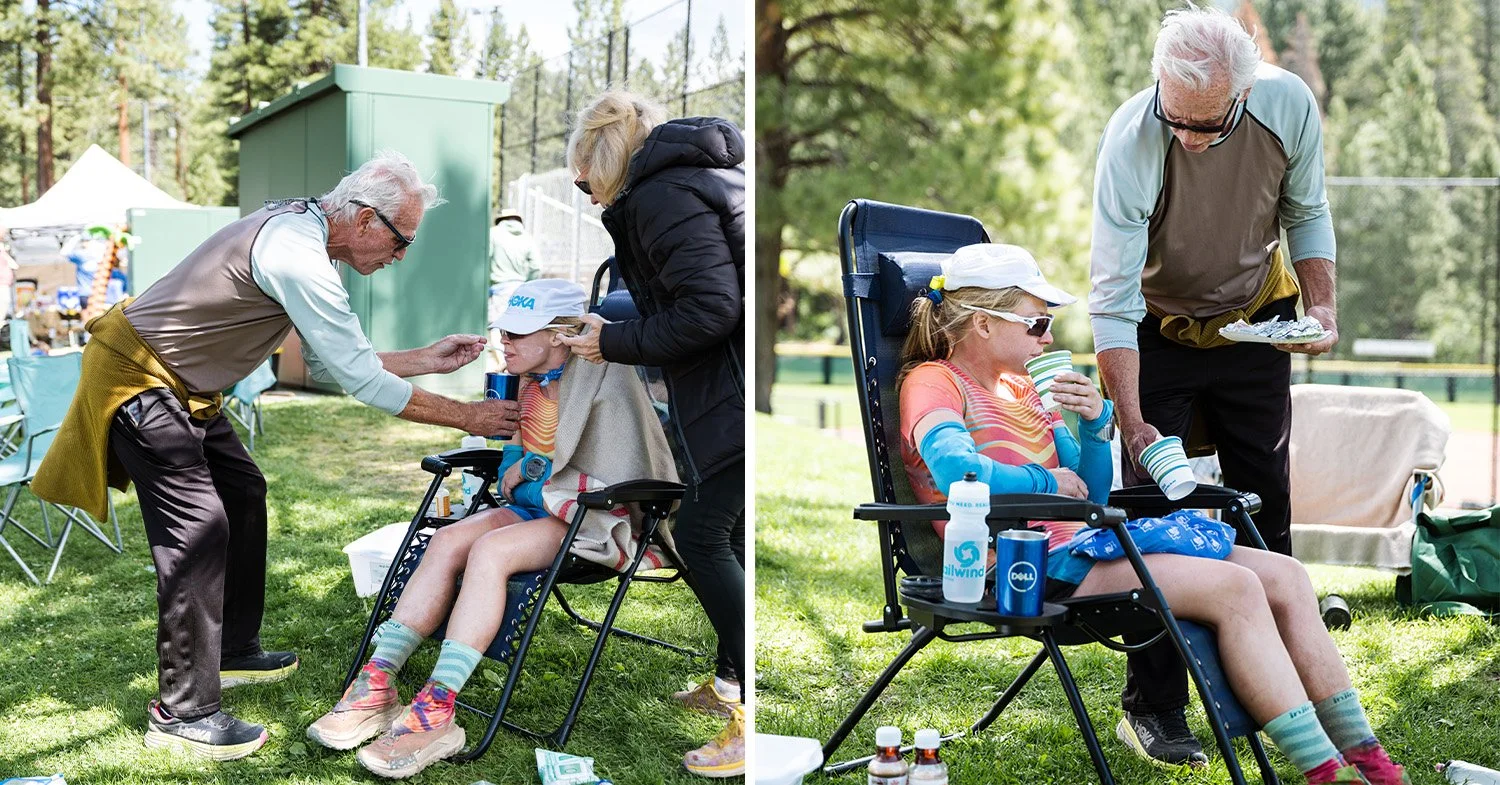
Her crew hands her pre-packed nutrition baggies at each checkpoint, containing carefully selected items: chews for easier digestion, salty potato chips, and nutrition-rich bars. They also brought her a thermos filled with her secret weapon — a mixture of ramen and mashed potatoes.
"It's really gross, but it goes down really well," Hughes admits. "It's just the perfect little thing you need: starch, carbohydrate, and salt. The broth is really nice, especially at night when it's cold and you just want something hot."
At aid stations (like Destination Trail’s aid stations, many of which offer a variety of cold and hot foods), she gravitates toward pancakes, quesadillas, and whatever soup is available. If her stomach is upset, broth becomes her best friend. She also keeps a Dunkin' Donuts iced mocha on hand, sometimes mixing in protein powder for an extra boost.
The Carb Concentration Problem
One reason Hughes is careful with gels? They're too concentrated. It's such a high concentration of carbohydrate that our bodies can have a really hard time absorbing," she says. "I think a lot of gut issues stem from these really high carb gels that our bodies can't process."
The same principle applies to hydration mixes. Hughes dilutes her hydration drinks significantly because high carb concentrations cause the body to pull water into the gut to dilute them. That means less fluid actually reaching your muscles where you need it.
"If you're getting your calories from the drink mix, you're not getting as much fluid because so much of it is going into the gut instead of into your muscles," she explains.
Her Pre-Race Ritual
Hughes keeps her pre-race eating relatively normal, with a few strategic adjustments. She reduces fibrous foods the night before (goodbye, salad) and gradually increases carbohydrate intake throughout the week leading up to the race, rather than carb-loading all at once.
"There's kind of a misconception around carb loading," she notes. "When you don't eat that many carbs and the night before you eat a ton, your body's like, ‘what's happening?’ Instead, I increase it a little bit more throughout the week. For example, I’d add about 100 calories more in carbohydrates each day."
The morning of the race, Hughes has the same breakfast every time: a “superhero muffin” from the “Run Fast Eat Slow” cookbook, a banana with almond butter, and electrolyte-enhanced water. These muffins, made with almond flour, oats, zucchini, carrots, nuts, dried fruit, and chocolate chips, have become her daily pre-run staple.
Eating Constantly (But Strategically)
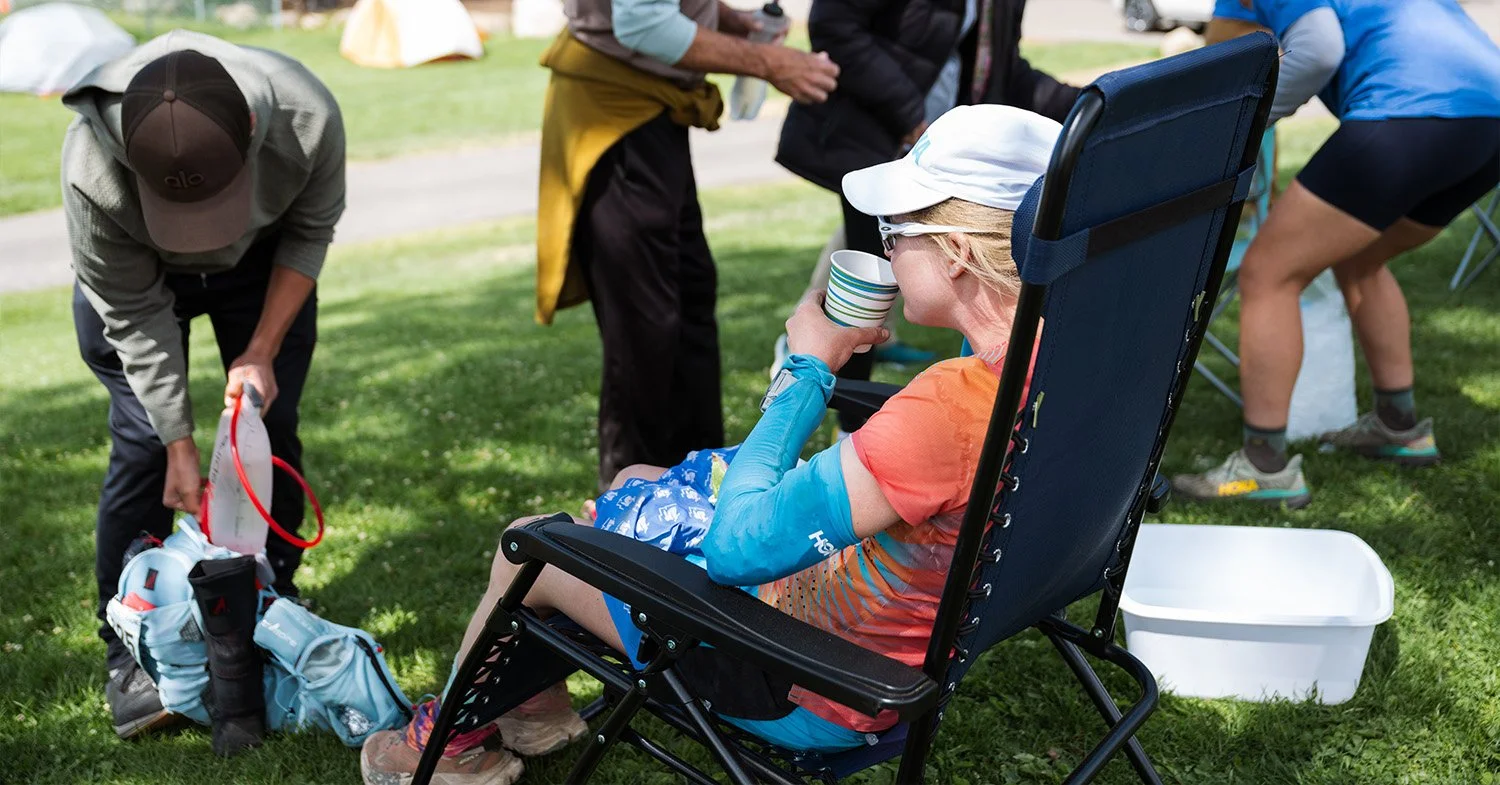
Rather than calculating exact carbohydrate intake per hour, Hughes focuses on constant, small consumption. "I try to eat pretty constantly; I’m always nibbling on something," she says. "Sipping things over time is easier on your digestion instead of putting down a ton all at once."
This strategy works well for the first 100 miles. After that? "It gets really hard to eat from the palate fatigue sometimes,” she said. At the Moab 240, where she was the top female finisher in 2021, her tongue developed sores from all the sugar.
"Palate fatigue" refers to when your taste buds and mouth get so tired of eating the same types of foods (especially sweet, processed nutrition products) that eating becomes difficult or even repulsive. It's basically sensory overload for your taste buds. Imagine eating candy and energy gels for 30+ hours straight — eventually your mouth just rebels against it. In extreme cases (like Annie experienced), you can actually develop physical irritation in your mouth from constant sugar exposure.
Her solution? Keep a toothbrush handy. "It's really refreshing and I think it helps if you're starting to get really tired of all the sweet stuff. It cleans everything out and helps me reset."
Backup Plans for When Things Go South
Even the best nutrition plan can fall apart during a 200-mile race. Hughes keeps ginger candy chews (Gin Gins) in her pack for settling her stomach, along with ginger ale, seltzer water, and Tums.
"Having a plan just in case your stomach does go off is really important," she says.
Caffeine Strategy: Wait for It
Hughes holds off on caffeine until the second morning, around 24 hours into the race. Her go-to is coffee around 3 or 4 a.m., when temperatures drop and she needs both warmth and a boost. She prefers actual coffee, especially Dunkin' Donuts iced mochas, over caffeine pills.
"I tried caffeine pills, but I don't really notice a lift from that. I do notice it from the coffee," she explains. "I think just the combination of the sugar and the caffeine, it's like an instant lift. And the milk helps make it easier on the stomach."
She also uses a caffeinated hydration mix later in races when sleepiness hits, but generally saves caffeine for nighttime rather than using it during the day.
Practice Makes Perfect (Literally)
Hughes's biggest advice for runners tackling their first Destination Trail 200-miler? Practice eating aid station foods during training runs.
"Pack your pack like you will for the race and make sure everything fits well," she recommends. "You have to be a little bit more self-sufficient in 200s because the aid stations are pretty spaced out."
Annie is also a coach and has her athletes practice carrying more water than normal, test their electrolyte preferences, and create a detailed nutrition plan with notes for crew members. For example, Destination Trail emails runners the aid station food lists before each race, which allows them to plan what they'll actually want to eat mid-race.

Find What Works for You: Test, Adjust, Repeat
Annie Hughes's real food strategy worked for her, but that doesn't mean it'll work for everyone. Some ultra runners thrive on gels (for example, Neversecond products, which are available at Destination Trail race aid stations, are known for being easy on the stomach). Others need quesadillas at every aid station. The only way to know what your body can handle at mile 150 is to test it during training. Your training runs are your laboratory.
Ready to test your own nutrition strategy at a Destination Trail race? Start experimenting now. Pack your vest like you will on race day. Drink that hydration mix for hours to see if it sits well. Eat a quesadilla at mile 20 and see if you regret it at mile 25. And if you end up mixing ramen with mashed potatoes at 2 a.m., you'll know you're in good company.
Want more racing insights beyond nutrition? Check out Manu Vilaseca and Kilian Korth's reflections on winning the Triple Crown for training strategies that might work for you.
Annie Hughes coaches for Sharman Ultra Coaching. Follow her training and racing adventures on Instagram.