
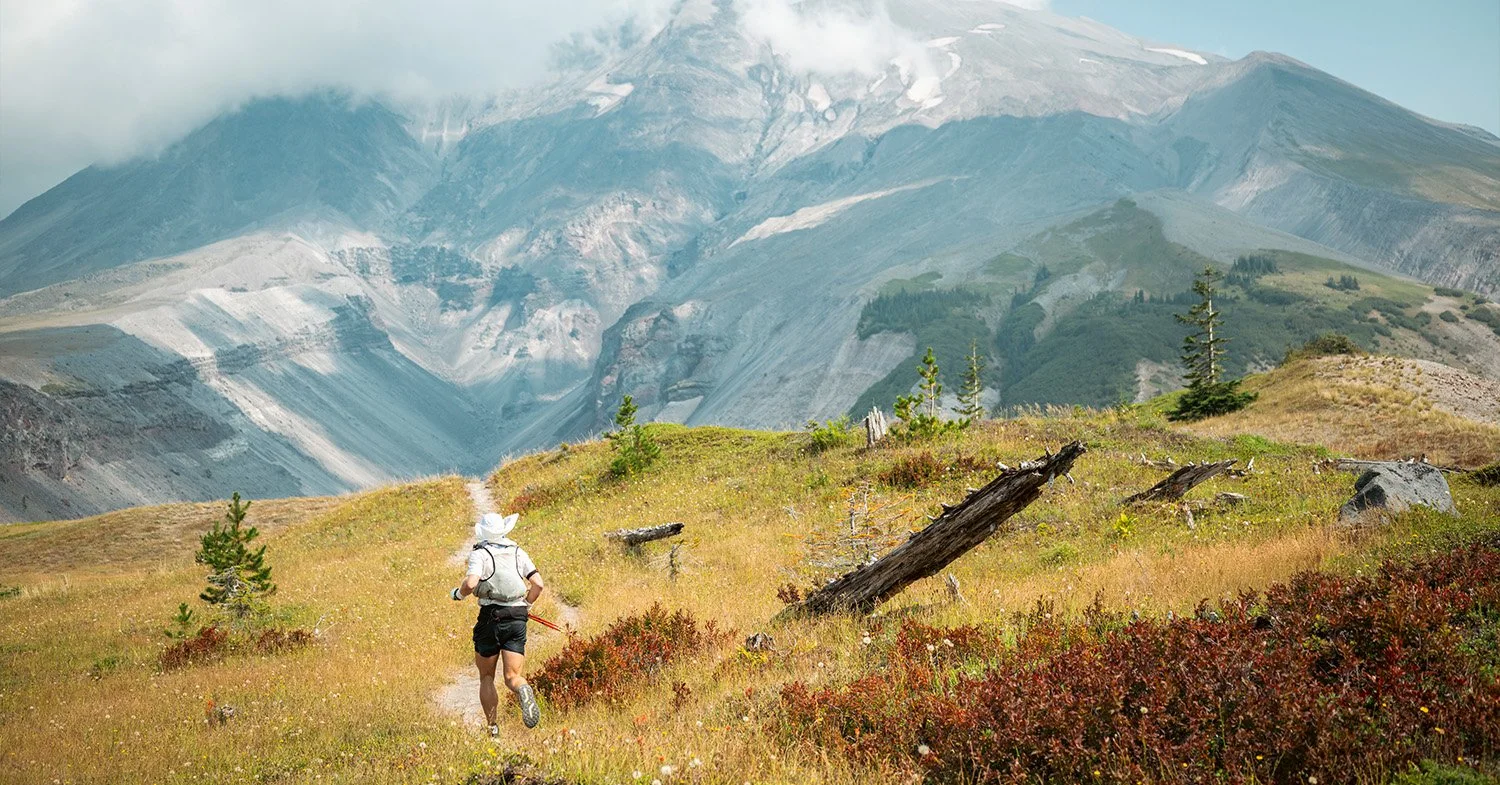
Key Takeaway
The 2026 Moab 240 was canceled partway through due to flooding, high winds, and unsafe course conditions, so there are no official places, series winners, or course records for this year's Triple Crown and Grand Slam. We caught up with five series runners to talk about the highs, the lows, the people who carried them, and the unfinished business they're bringing into 2027.
Every year, a small group of runners looks at a calendar with three (or four) 200+ mile races on it and thinks, "Yep, that seems reasonable." The Triple Crown of 200s strings together the Tahoe 200, Bigfoot 200, and Moab 240 in a single season. The Grand Slam adds the Arizona Monster 300 to the front, just in case 640 miles of mountain trail wasn't quite enough.
This year, Mother Nature had the final say. On October 11, overnight flooding made a section beyond Bridger Jack Aid Station impassable, while high winds and heavy rain battered the La Sal Mountains and Geyser Pass. Runners who reached the flooded section spent the night at Bridger Jack with volunteers and staff, sheltered with heat, food, and water, before local emergency responders helped evacuate them. With conditions deteriorating across multiple parts of the course, we made the call to cancel the remainder of the race. Every runner was safely off course by 9:30 p.m. that Sunday.
It's not the ending anyone trained for. But as the runners told us, the story of this season is a lot bigger than its last chapter.
The 2026 Series by the Numbers
Because Moab didn't reach its finish line, there are no true places or series winners this year, and 2026 Triple Crown times aren't eligible for course records. The cumulative times posted on UltraSignup reflect where things stood when Moab was officially called. Even so, a few numbers jump off the page.
Overall there were 20 “finishers” for the Triple Crown and 9 for the Grand Slam.
The women showed up in force. Seven of the 10 fastest cumulative Triple Crown times belonged to women: Aimee Warnke (126:01:07), Ashley Paulson (130:11:18), Jessica Schiller (131:02:54), Elle Jones (137:14:39), Tina Ormuz (141:35:01), Kiersten Strate (144:10:40), and Colleen Mentz (149:29:27).
Fastest Triple Crown times: Aaron Kubala posted the quickest cumulative time at 95:30:41, followed by 50-year-old Josh Coleman at 118:24:23.
Fastest Grand Slam times: Rolando Mendoza logged the fastest cumulative Grand Slam time at 239:26:48, and Renata Skersyte led the women at 329:28:27.
Numbers only tell part of it, though. Here's what the season looked like from the trail.
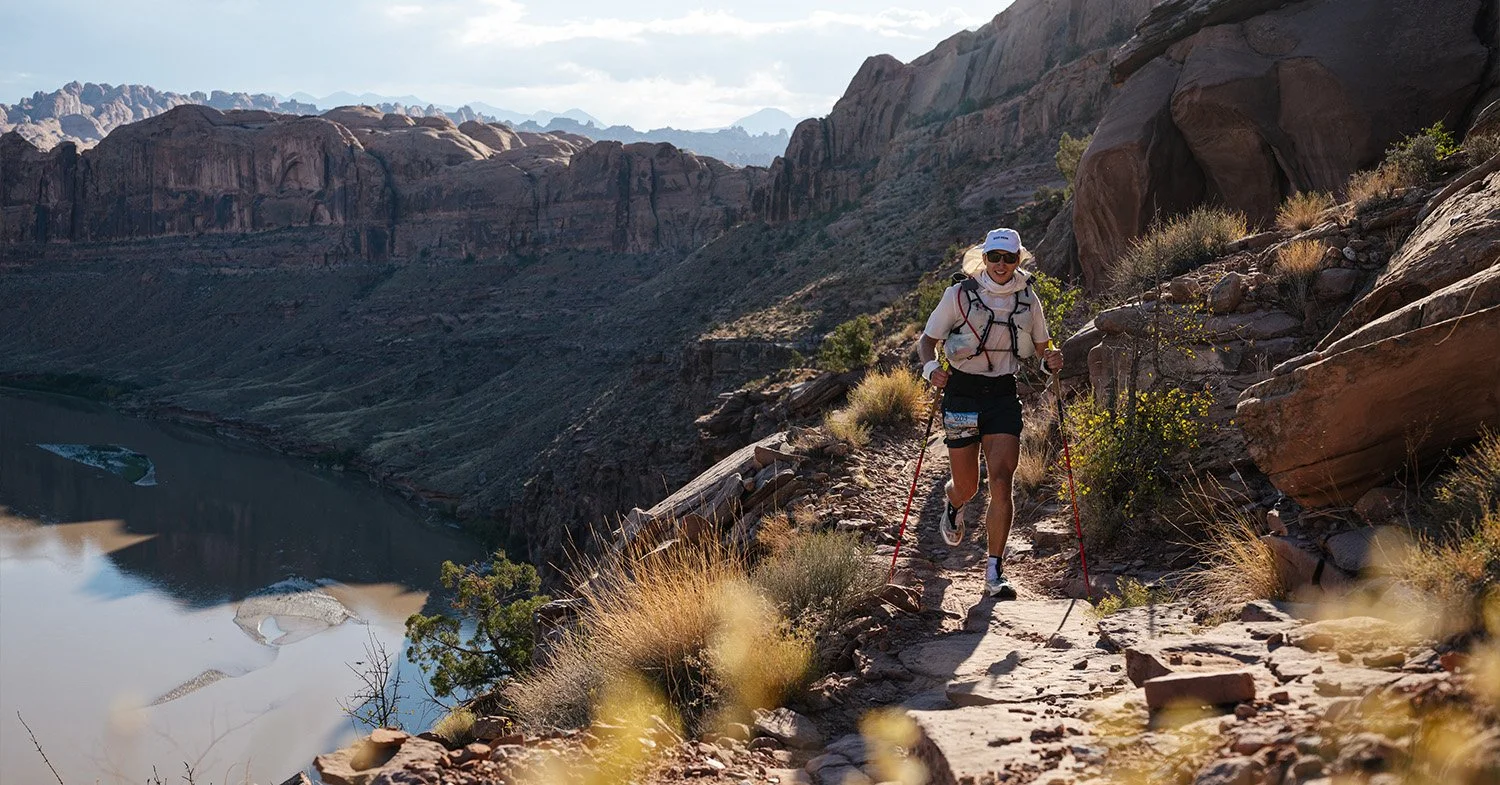
Aaron Kubala: "I Went Into This Race to Set the Record"
Aaron won Tahoe with a course record, won Bigfoot, and was leading Moab with the finish almost in reach. Back in 2023, Aaron ran Moab as his first 200-mile race, and was surprised to find himself at the front of the pack. "I went into that race in 2023 to see what I was capable of," he said. "I went into this race to set the record."
He was right on pace for a sub-55-hour Moab, four hours ahead of the course record and two hours ahead of the Triple Crown record. Then came the climb to Geyser Pass, where 60+ mph winds tore through stands of dead trees. "Every 10 seconds you'd hear another dead tree crack and fall, echoing across the mountain, mixing with the roar of the wind, and wonder if this is the one that would hit you," he said. At the aid station, volunteers were physically holding tents in place to keep them from blowing off the mountain.
When the race was called, Oowah Lake became his finish line for the entire season. "I just stood there for a few minutes and let it all soak in."
The season meant far more to Aaron than any results page could show. He lost his mom in April, just weeks before Tahoe, and wasn't sure he'd be able to race at all. For him, these miles became a way of processing grief and of "living more deeply, more fully, and with more love." The fundraiser for metastatic breast cancer research he launched before she passed has raised nearly $60,000 in her honor and will stay open through the end of 2026.
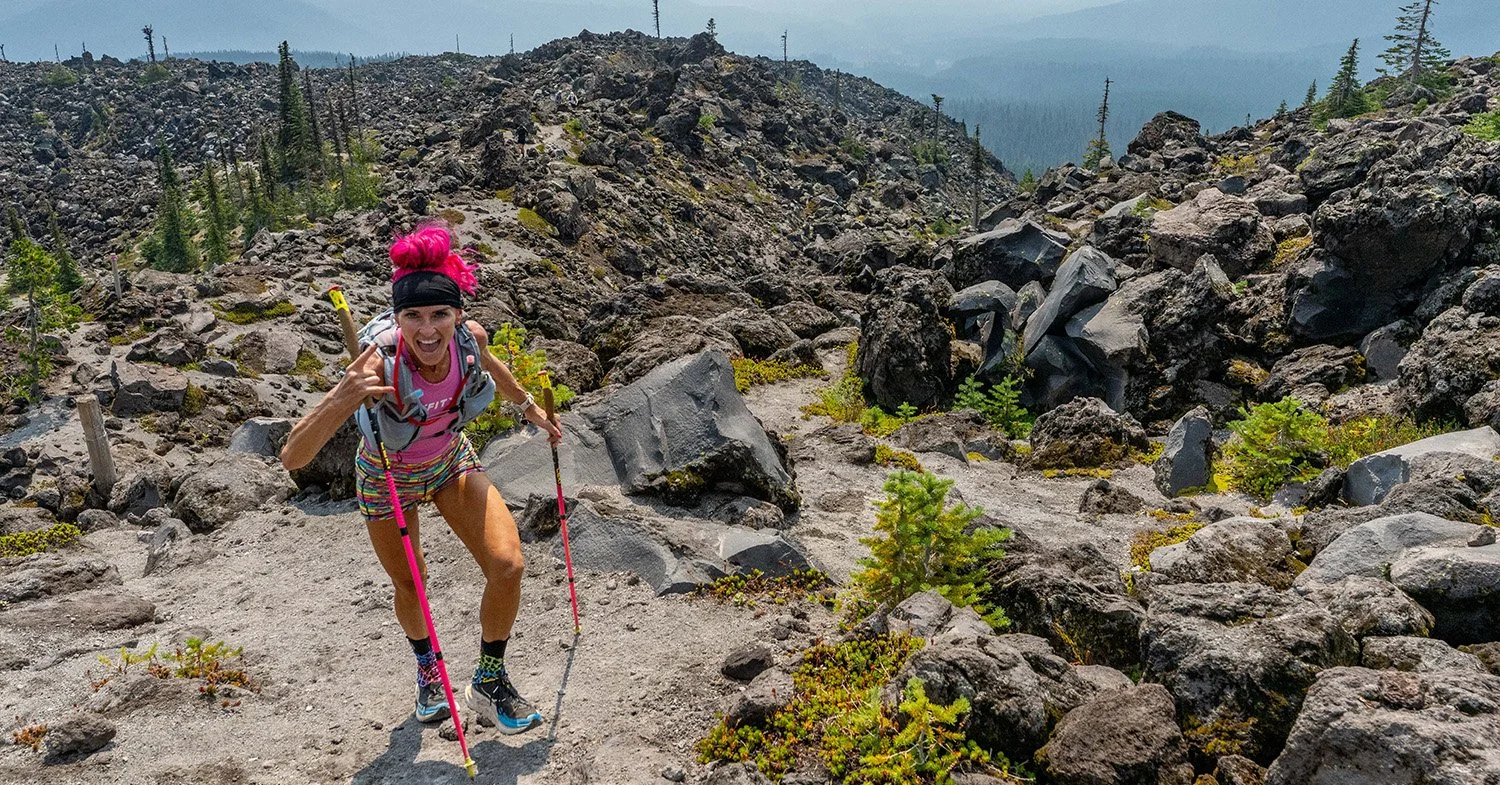
Ashley Paulson: "I'm Definitely Not Finished With Moab!"
Ashley came into Moab a few hours behind Aimee Warnke in the series standings and was leading the women's race with roughly 40 miles to go when it was called. Her first reaction was disbelief. "I had so much left in me and was ready to finish what I came there to do."
She knew the math going in but refused to run anyone else's race. "My job was to keep moving, take care of my body, make smart decisions, and run my race," she said. "I can only control my effort, my attitude, and how much I'm willing to fight."
Her recovery between races? Refreshingly unglamorous. "I don't have a magic recovery secret. I'm just incredibly consistent with the basics. And probably eat more than most people think is humanly possible!"
She's quick to credit her crew. Mattie kept everything running smoothly on course, her youngest son Max came along to help crew, and her 19-year-old daughter held down the fort at home with all the animals. "It really does take a village!"
As for Moab, Ashley is already eyeing a rematch. "I want to go back, put together the race I know I'm capable of, and earn that finish."
Got some unfinished business of your own in the red rock? Plan to join the lottery for the Moab 240.
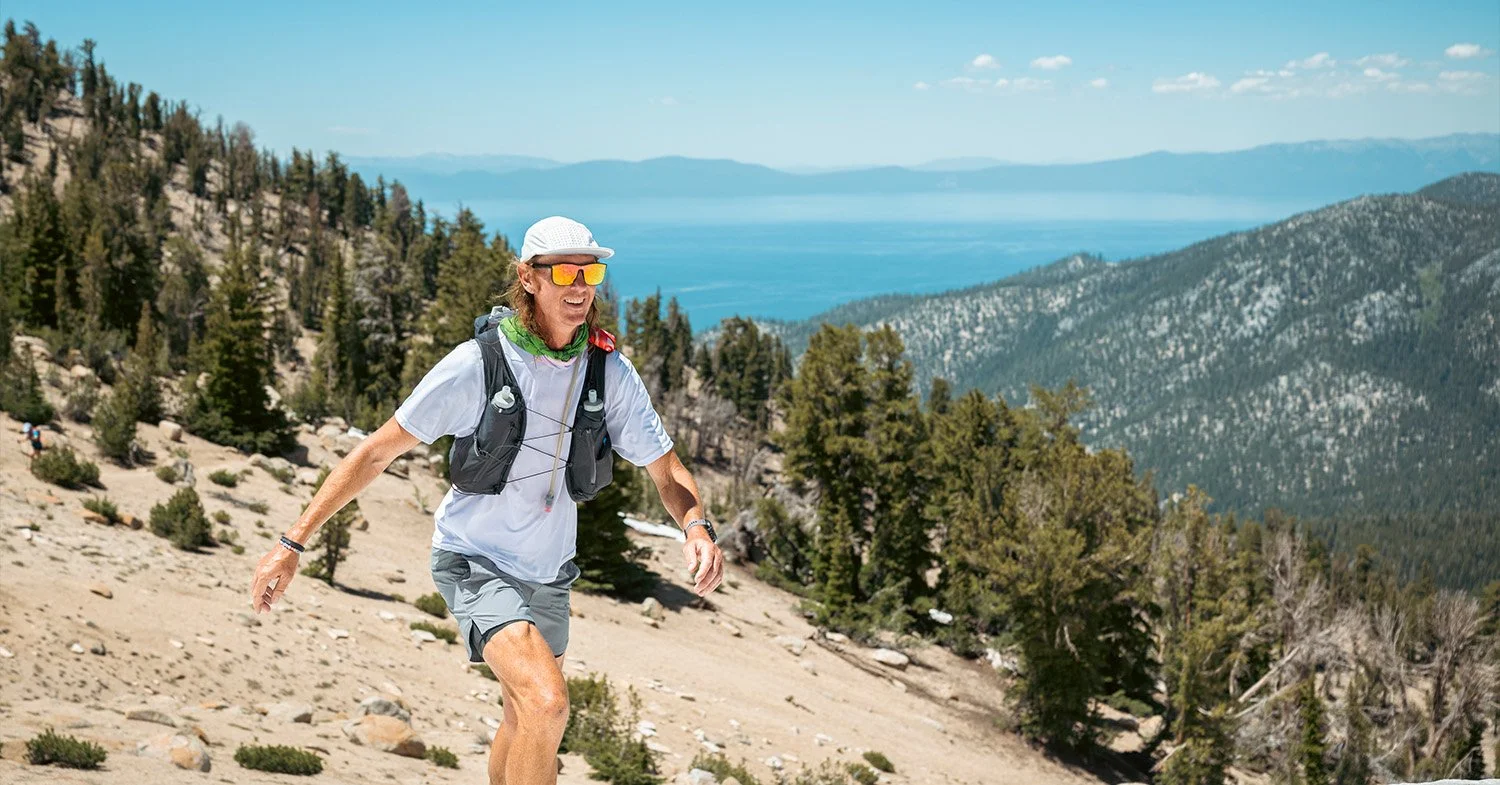
Josh Coleman: Next Aid Station, Next Step
Josh trains out of Florida, which isn't exactly known for its alpine climbs. His solution: live full-time in a camper van. He kicked off a yearlong, 12,000-mile adventure on his birthday, May 30, and logged more than 400 miles and nearly 60,000 feet of climbing in the 13 days before Tahoe. "The climbs still hurt, but at least I wasn't completely surprised by them."
At 50, he finished third overall at Bigfoot. "It means my body is still willing to do hard things at this age, which is all I was really hoping for." These days, recovery is non-negotiable. Between races he kept things simple in the van and took real rest "instead of pretending I'm still 30."
Josh was about 112 miles in when Moab was called. True to trail family form, he headed back to HQ and pitched in wherever he could.
When the miles got hard this year, he thought of his late wife, Erin. "Her passing gave me a mental toughness because I'll never go through anything that hard again," he said. "No matter how rough it gets out there, I just keep moving forward, next aid station, next step."
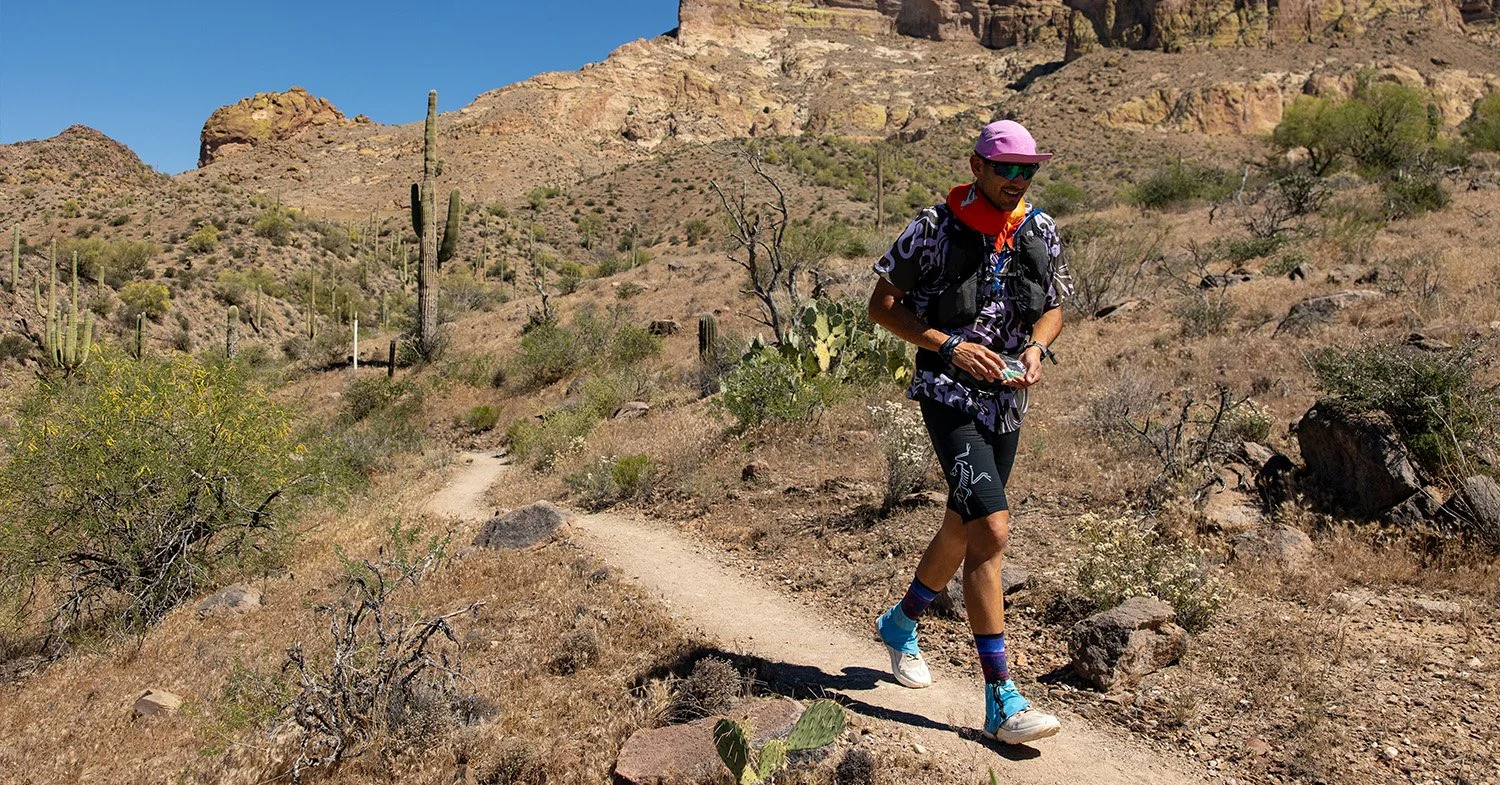
Rolando Mendoza: The Premium Runcation
Rolando posted the fastest cumulative Grand Slam time this year, which is wild considering he almost didn't start. An ankle fracture from a previous Moab flared up again after AC100, and he seriously considered quitting running. Instead, he pivoted to a 24-hour mountain bike race and rode 256 miles. Four weeks out from the Monster, his ankle felt fantastic, so he squeezed in a short training block and went to see what his legs would give him.
The answer was a lot. "Monster made everything else easier!" he said. "When you survive the Sonoran desert in peak heat carrying your gear and six liters of water, anything is possible!"
Between races, his recovery plan involved chicken salads during the work week and pouring concrete on his construction job, which he calls "free active recovery." His one regret: not doing more PT sooner.
When the storm hit Moab, Rolando focused on what he could control. Afterward, he headed to the Elk Ranch with family and friends to drink beers and listen to the elk bugle. "You can't own a medal, it goes away, but the amazing people in your life are there through the good or bad because they love you, and that's priceless!"
He's already signed up for the Monster again in 2027, and he makes a pretty compelling pitch: "Running for four days with my imaginary friends and hallucinations? Now that's a premium Runcation!"
Ready to book your own Runcation? Check out the Arizona Monster 300.
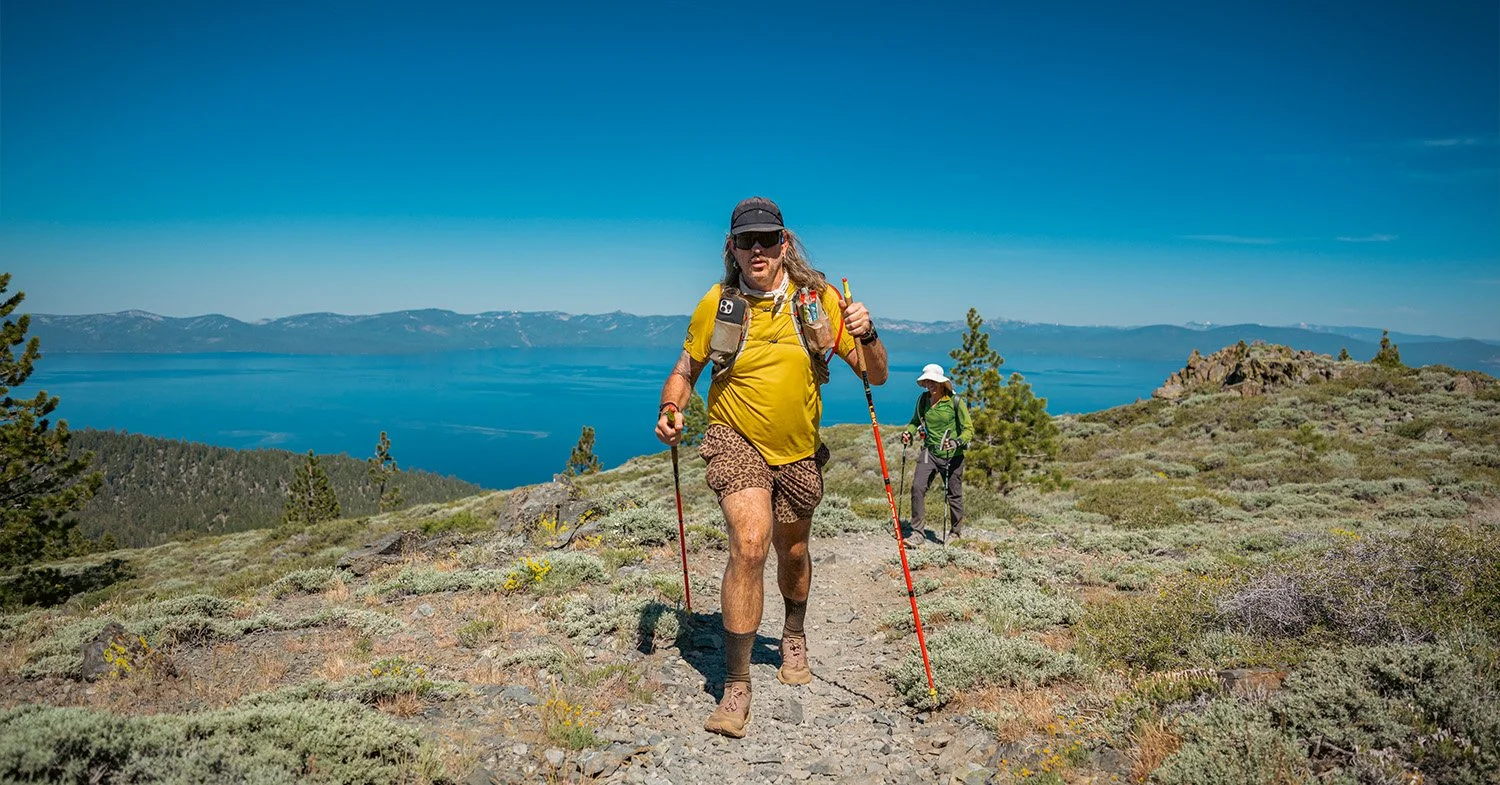
Robby Chaney: More Than 15 Days on Course
Robby's year started with 300 miles in the Sonoran Desert in March, and because the Grand Slam apparently wasn't enough, he squeezed in Cocodona 250 between the Monster and Tahoe. All told, he spent more than 15 days on course. "I'm filled with gratitude and wonder at all of the places I've seen and the people I met," he said.
His lowest point came at Bigfoot, rolling into the Klickitat Aid Station exhausted, dehydrated, hungry, and chasing the cutoff. His crew and our volunteers patched him back together and sent him out just in time.
As a proud dad of two small boys, Robby learned to plan every day ahead of time so he could show up for his family, his job, and his training. "There is always time to do things that are important," he said.
He was one of the runners who spent the night at Bridger Jack, and he says the volunteers, runners, and pacers there turned it into an unforgettable experience. He doesn't feel like his year is incomplete, but he's coming back for another Grand Slam in 2027. "Hopefully Moab will have better weather next year!"
His biggest lesson? "Trail running is about problem solving. We are capable of so much more than we might think."
Here's to 2027
This season didn't end with finish line photos or record books, but it was full of grit, grace, and the kind of stories that only come from the wildest decisions. A huge thank you to every runner, crew member, pacer, and volunteer who made 2026 happen, and to the local emergency responders who helped bring everyone home safely from Moab.
More than one of these runners is already plotting a return, and we can't wait to see them (and maybe you) at the start line.
Think you've got what it takes? Triple Crown and Grand Slam registration opens each May and lets you bypass all of the individual race lotteries. Learn more about the Triple Crown and the Grand Slam, and sign up for our newsletter to be the first to know when spots open.