Summary
The best trail running shoes for ultramarathons prioritize fit, comfort, and confidence across long miles and varied terrain. In this roundup, we asked elite ultra runners and dug into community feedback to highlight five shoes worth knowing for your next big effort, whether that's a 50K, a 100-miler, or a multi-day 200-mile race.
Top picks: Mount to Coast (Multiple Models), | Speedland (Multiple Models)| Topo Mountain Racer | Hoka Mafate X and Mafate 5 | Altra Olympus 6
Let's be honest: You could spend tens of hours reading trail shoe reviews on the internet, trying to find the best shoe possible. But just an hour in, the specs all seem to blur together, the buzzwords stack up, and somehow every shoe is simultaneously "lightweight yet protective" and "responsive yet cushioned."
So instead of another gear roundup written by someone who ran exactly two trail 5Ks, we went straight to the source: our ultra runner community on Instagram. These are people logging 50-, 100-, and even 200-mile races across technical mountain terrain. They've formed very strong opinions about what goes on their feet, and they're not shy about sharing them.
Whether you're gearing up for one of our endurance races or you're deep in a training cycle for something gnarly later in the year, finding the right shoe matters.
Ready to put your shoes to the test?
Sign up for one of our upcoming races!
How to Choose the Best Trail Running Shoes for Ultramarathons
Shopping for the best trail running shoes for ultramarathons is a different exercise than picking up a new pair for a 10K or a road marathon. The stakes are higher, the miles are longer, and the wrong choice shows up in a very unpleasant way somewhere around mile 60.
"Fit, comfort, and confidence are the areas we like to focus on when thinking about any of our shoes, especially those that will cover 100+ mile distances in a single effort," says Jared Smith, Senior Product Line Manager at HOKA.
Here's what that looks like in practice:
Outsole setup: Lug size, shape, and coverage determine how well a shoe grips rugged terrain. Deeper, widely spaced lugs work better in mud; a lower-profile outsole is often enough for hard-packed trails.
Midsole foam: A firmer foam underfoot provides stability, while a slightly softer forefoot helps "adapt and absorb the rugged terrain surface," according to Jared. If the foam compresses too early, you'll feel it long before the finish line.
Fit and upper accommodation: Your feet will swell over 100+ miles. Look for uppers with some stretch or a roomier toe box that can handle that volume change without creating hot spots.
Gaiter compatibility: Small detail, big impact. As Jared puts it, "the ability to attach a gaiter to the shoe to prevent the ever pesky pebble from getting into your shoe is key." A heel loop is worth checking for before committing to a race shoe.
And regardless of which shoe you land on, make sure to log real miles in it before race day!
Best Trail Running Shoes for Ultramarathons: 5 Community Picks
#1. Mount to Coast, Multiple Models
Price: $160-$180 | Best for: Versatile ultra training and racing, including 200-mile efforts
If you haven't heard of Mount to Coast yet, you’re welcome! This Hong Kong-based brand launched in 2024 with a clear mission: design shoes specifically for the demands of ultra-distance running. Their line includes the T1 (a technical trail shoe), the H1 (a versatile road-to-trail hybrid), the P1 (a stability-focused option), and the upcoming M1, which is already making noise in the ultra community before it's even widely available.
Multiple runners in the Destination Trail community said they'd tried several models across the line and loved them all, which is a pretty strong endorsement for a relatively young brand.
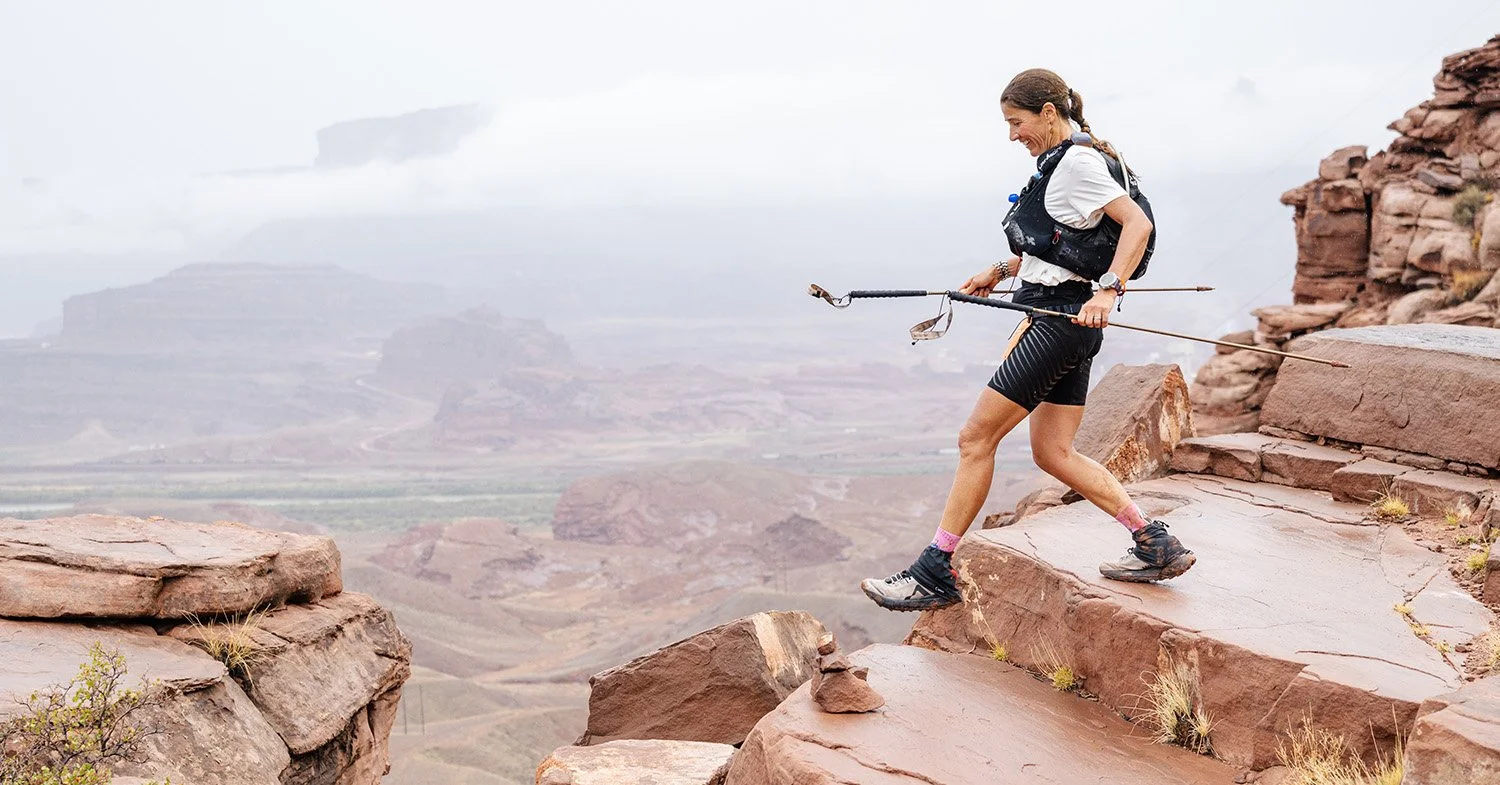
Manuela Vilaseca, Female Winner of the Triple Crown and a Mount to Coast athlete, has been racing in the M1 and calls it her favorite shoe for the 200-mile distance. She says the combination of comfort, responsiveness, and stability has held up across varied terrain, and that "the outsole is a Vibram pattern that grips very well on technical terrain, giving me the confidence boost I need in order to push the downhills." She's also been impressed by the durability: racing 200 miles on a single pair and finding they still have plenty of life left is, as she puts it, "amazing."
Other reviewers highlight the innovative dual lacing system that allows independent adjustments to the midfoot and forefoot for a truly customized fit, the LightCELL PEBA-hybrid midsole foam that's both lightweight and responsive, and the Vibram outsole that holds up on technical terrain. The T1, in particular, has earned praise as a shoe that's comfortable right out of the box, with a Kevlar-reinforced upper and solid grip in mixed conditions.
Things to Consider
Some reviewers mention issues with the cinch cord on the T1, which has loosened for some runners mid-run (the H1's cord seems more secure). Also, the brand runs slightly short, so sizing up half a size is worth considering for ultra distances when foot swelling is a factor.
#2. Speedland, Multiple Models (Community's Choice)
Price: $250-$299 | Best for: Runners who want maximum fit customization and technical performance
Speedland is a relative newcomer, launching in 2021 out of Portland, Oregon, and they've made a name for themselves by doing things differently. Their most distinctive feature? A dual BOA Fit System, the dial-based lacing you'd normally find on cycling shoes or ski boots, is applied here to their trail running shoes.
It sounds like a gimmick until you're 80 miles into a race with cold, fumbling fingers trying to re-tie laces. The BOA system lets you micro-adjust fit on the fly, tightening before technical descents or loosening slightly as your feet swell later in the race. It's one of those features that ultra runners tend to either discover and love, or wonder how they ever ran without.
The community's enthusiasm here is real. Reviewers consistently call out the BOA PerformFit Wrap as central to what makes Speedland shoes work, noting the "zonal control" it offers from ankle to forefoot. The Michelin outsole with 6.5mm lugs delivers excellent grip across conditions, the midsole leans toward the firmer, more responsive side (rather than plush), and most models include an integrated gaiter option that keeps debris out without adding a separate piece of gear.
Things to Consider
The reviews are mostly positive, but there are some downsides mentioned. The price tag is significant, starting around $250. The BOA laces can loosen slightly on longer efforts and require a quick re-tighten. The shoes don't accommodate custom insoles or orthotics well, which is a real limitation for runners who rely on them. And if you're new to Speedland, the amount of technology in the shoe can feel overwhelming at first.
#3. Topo Mountain Racer
Price: $149.95 | Best for: Runners with wide feet who want a durable, versatile option for varied terrain
The Topo Mountain Racer is a crowd-pleaser with one defining feature that keeps runners coming back: a genuinely foot-shaped toe box that gives your toes room to splay naturally. This isn't a marketing claim; it's one of the widest forefoots in the trail market and particularly helpful over long miles when swelling is a reality.
Pair that with a Vibram Megagrip outsole featuring 6mm lugs, and you have a shoe that handles an impressive range of conditions: technical terrain, mud, wet rock, and hard-packed dirt alike. Multiple reviewers call the traction "unrivaled" for the versatility it offers, and durability reports are consistently strong. One tester had 175 miles on their MTN Racer 2 with barely visible wear.
The ZipFoam midsole offers a moderately cushioned, responsive ride. It's not the flashiest foam on the market, but it holds up well over long descending days when cheaper foams tend to compress and deaden underfoot. At $149.95, it's also one of the better values among the best trail running shoes for ultramarathons.
Things to Consider
The wider forefoot cuts both ways. Runners with narrow or average-width feet have reported slippage in the forefoot and toenail issues from excess movement. The midfoot lockdown can loosen over long runs for some, and the upper has been called out for stretching slightly with extended use. One reviewer noted that despite the name, they'd hesitate to race it on truly technical mountain terrain due to the midfoot security issue. But for wide-footed runners? It's hard to beat at this price.
#4. Hoka Mafate X and Mafate 5
Price: ~$200-$225 | Best for: Runnable 200-mile-distance races, cushioned but stable long-haul efforts
The Hoka Mafate line has a loyal following in the ultra community, and both the Mafate X and the Mafate 5 come up regularly in the ultra runner community.
Tahoe 200 winner and HOKA athlete Annie Hughes named the Mafate X as one of her favorite shoes to race in, a pretty meaningful endorsement from someone who races and wins at 200-mile distances.
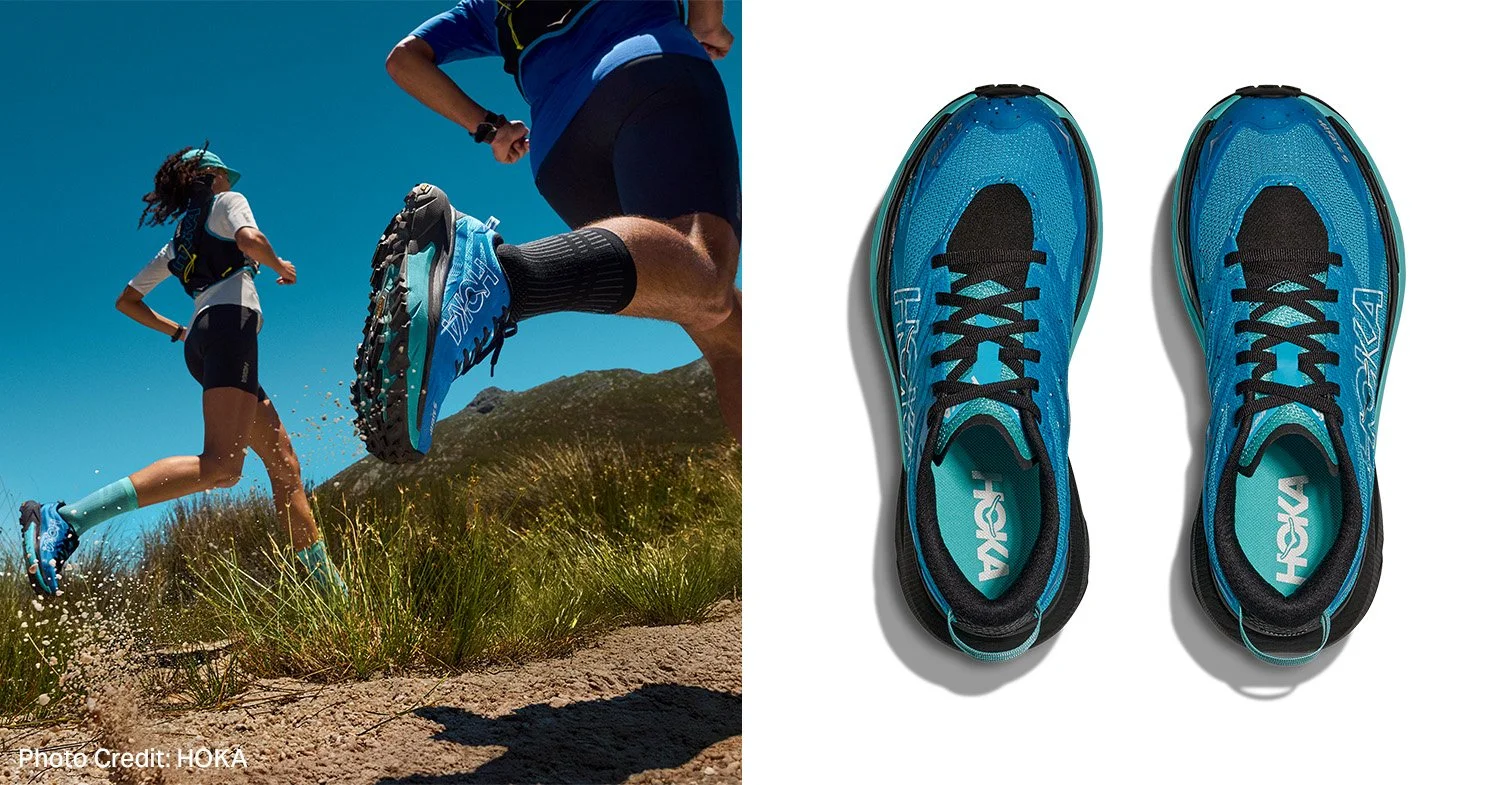
The Mafate X was designed with runnable long distances in mind, using a leno woven upper that's both open and supportive, an H-shaped carbon fiber plate set within layered SCF Peba and EVA foam, and a moderate lug height that delivers a comfortable and confidence-inspiring ride. It's built for covering serious ground efficiently and comfortably.
The Mafate 5 takes a different approach, with a dynamic vamp in the forefoot that allows the upper to stretch and accommodate foot swelling over long distances. The midsole uses a firmer foam underfoot for stability with a slightly softer forefoot that absorbs rough terrain. The 5mm multidirectional lugs offer solid traction without excessive weight, and the heel loop accommodates a gaiter attachment for runners who want extra debris protection.
Things to Consider
Common critiques across the Mafate line tend to center on the high price and the more firm, structured feel that some runners find less comfortable in the early miles before breaking in. Runners who prefer a more flexible, ground-feel experience may find the Mafate too cushioned and structured for their taste.
#5. Altra Olympus 6
Price: $170-$175 | Best for: Max-cushion lovers, wide-footed runners, and those prioritizing comfort over pace
The Altra Olympus 6 is the shoe for runners who want maximum cushioning. It's Altra's most built-up trail shoe, and it has a devoted following among ultra runners who'd rather arrive comfortable than arrive fast. The signature FootShape toe box gives toes genuine room to splay, the Vibram Megagrip outsole delivers reliable grip across a range of surfaces, and the zero-drop platform promotes natural foot positioning over long efforts.
The updates in the Olympus 6 include improved upper breathability, increased lug depth for better grip, and reinforced overlays addressing the durability concerns some runners had with the Olympus 5. Reviewers who've put 100+ miles on the Olympus 6 report that the upper is holding up significantly better than its predecessor.
Things to Consider
It's worth being clear about what this shoe is not. It's heavy, around 12-13 oz depending on size, which is substantial for a running shoe. The CMEVA midsole is firm and durable, but it doesn't have the energy return of modern nitrogen-infused or Pebax foams. On highly technical terrain, the high stack height can feel less nimble and reduce ground feel. It also runs slightly small, so sizing up half a size is generally recommended.
Find Your Fit, Find Your Race
The best trail running shoes for ultramarathons are the ones that work for your foot shape, your gait, and the terrain you're racing on. It's worth spending real time in any shoe before relying on it for a long race, and many experienced ultra runners rotate two or more pairs across different distances and conditions.
If you're ready to put your shoes to the test, we have a full race calendar across distances from 20 to 300-mile multi-day events. Whether you're chasing your first finish or trying to podium at something longer, there's a race waiting for you.